Showing posts with label History. Show all posts

Thursday, January 28, 2010

R.I.P. Howard Zinn


By Mark Feeney and Bryan Marquard, Globe Staff - Boston News

Howard Zinn, the Boston University historian and political activist who was an early opponent of US involvement in Vietnam and whose books, such as "A People's History of the United States," inspired young and old to rethink the way textbooks present the American experience, died today in Santa Monica, Calif, where he was traveling. He was 87.

His daughter, Myla Kabat-Zinn of Lexington, said he suffered a heart attack.

"He's made an amazing contribution to American intellectual and moral culture," Noam Chomsky, the left-wing activist and MIT professor, said tonight. "He's changed the conscience of America in a highly constructive way. I really can't think of anyone I can compare him to in this respect."


Chomsky added that Dr. Zinn's writings "simply changed perspective and understanding for a whole generation. He opened up approaches to history that were novel and highly significant. Both by his actions, and his writings for 50 years, he played a powerful role in helping and in many ways inspiring the Civil rights movement and the anti-war movement."
For Dr. Zinn, activism was a natural extension of the revisionist brand of history he taught. "A People’s History of the United States" (1980), his best-known book, had for its heroes not the Founding Fathers -- many of them slaveholders and deeply attached to the status quo, as Dr. Zinn was quick to point out -- but rather the farmers of Shays' Rebellion and union organizers of the 1930s.

As he wrote in his autobiography, "You Can't Be Neutral on a Moving Train" (1994), "From the start, my teaching was infused with my own history. I would try to be fair to other points of view, but I wanted more than 'objectivity'; I wanted students to leave my classes not just better informed, but more prepared to relinquish the safety of silence, more prepared to speak up, to act against injustice wherever they saw it. This, of course, was a recipe for trouble."

Certainly, it was a recipe for rancor between Dr. Zinn and John Silber, former president of Boston University. Dr. Zinn, a leading critic of Silber, twice helped lead faculty votes to oust the BU president, who in turn once accused Dr. Zinn of arson (a charge he quickly retracted) and cited him as a prime example of teachers "who poison the well of academe."

Dr. Zinn was a cochairman of the strike committee when BU professors walked out in 1979. After the strike was settled, he and four colleagues were charged with violating their contract when they refused to cross a picket line of striking secretaries. The charges against "the BU Five" were soon dropped.

In 1997, Dr. Zinn slipped into popular culture when his writing made a cameo appearance in the film "Good Will Hunting." The title character, played by Matt Damon, lauds "A People’s History" and urges Robin Williams’s character to read it. Damon, who co-wrote the script, was a neighbor of the Zinns growing up.

"Howard had a great mind and was one of the great voices in the American political life," Ben Affleck, also a family friend growing up and Damon's co-star in "Good Will Hunting," said in a statement. "He taught me how valuable -- how necessary -- dissent was to democracy and to America itself. He taught that history was made by the everyman, not the elites. I was lucky enough to know him personally and I will carry with me what I learned from him -- and try to impart it to my own children -- in his memory."

Damon was later involved in a television version of the book, "The People Speak," which ran on the History Channel in 2009, and he narrated a 2004 biographical documentary, "Howard Zinn: You Can't Be Neutral on a Moving Train."

"Howard had a genius for the shape of public morality and for articulating the great alternative vision of peace as more than a dream," said James Carroll a columnist for the Globe's opinion pages whose friendship with Dr. Zinn dates to when Carroll was a Catholic chaplain at BU. "But above all, he had a genius for the practical meaning of love. That is what drew legions of the young to him and what made the wide circle of his friends so constantly amazed and grateful."

Dr. Zinn was born in New York City on Aug. 24, 1922, the son of Jewish immigrants, Edward Zinn, a waiter, and Jennie (Rabinowitz) Zinn, a housewife. He attended New York public schools and was working in the Brooklyn Navy Yard when he met Roslyn Shechter.

"She was working as a secretary," Dr. Zinn said in an interview with the Globe nearly two years ago. "We were both working in the same neighborhood, but we didn't know each other. A mutual friend asked me to deliver something to her. She opened the door, I saw her, and that was it."

He joined the Army Air Corps, and they courted through the mail before marrying in October 1944 while he was on his first furlough. She died in 2008.

During World War II, he served as a bombardier, was awarded the Air Medal, and attained the rank of second lieutenant.

After the war, Dr. Zinn worked at a series of menial jobs until entering New York University on the GI Bill as a 27-year-old freshman. He worked nights in a warehouse loading trucks to support his studies. He received his bachelor’s degree from NYU, followed by master’s and doctoral degrees in history from Columbia University.

Dr. Zinn was an instructor at Upsala College and lecturer at Brooklyn College before joining the faculty of Spelman College in Atlanta, in 1956. He served at the historically black women’s institution as chairman of the history department. Among his students were novelist Alice Walker, who called him "the best teacher I ever had," and Marian Wright Edelman, future head of the Children's Defense Fund.

During this time, Dr. Zinn became active in the civil rights movement. He served on the executive committee of the Student Nonviolent Coordinating Committee, the most aggressive civil rights organization of the time, and participated in numerous demonstrations.

Dr. Zinn became an associate professor of political science at BU in 1964 and was named full professor in 1966.

The focus of his activism became the Vietnam War. Dr. Zinn spoke at many rallies and teach-ins and drew national attention when he and the Rev. Daniel Berrigan, another leading antiwar activist, went to Hanoi in 1968 to receive three prisoners released by the North Vietnamese.

Dr. Zinn’s involvement in the antiwar movement led to his publishing two books: "Vietnam: The Logic of Withdrawal" (1967) and "Disobedience and Democracy" (1968). He had previously published "LaGuardia in Congress" (1959), which had won the American Historical Association's Albert J. Beveridge Prize; "SNCC: The New Abolitionists" (1964); "The Southern Mystique" (1964); and "New Deal Thought" (1966).

He also was the author of "The Politics of History" (1970); "Postwar America" (1973); "Justice in Everyday Life" (1974); and "Declarations of Independence" (1990).

In 1988, Dr. Zinn took early retirement to concentrate on speaking and writing. The latter activity included writing for the stage. Dr. Zinn had two plays produced: "Emma," about the anarchist leader Emma Goldman, and "Daughter of Venus."

On his last day at BU, Dr. Zinn ended class 30 minutes early so he could join a picket line and urged the 500 students attending his lecture to come along. A hundred did.

"Howard was an old and very close friend," Chomsky said. "He was a person of real courage and integrity, warmth and humor. He was just a remarkable person."

Carroll called Dr. Zinn "simply one of the greatest Americans of our time. He will not be replaced -- or soon forgotten. How we loved him back."

In addition to his daughter, Dr. Zinn leaves a son, Jeff of Wellfleet; three granddaughters; and two grandsons.

Funeral plans were not available.


MFL Notes: For the Americans who don't know their own history of war crimes, I highly recommend to read A People's History of American Empire in Comics.

Some photos of the Comics is here

The Book can be found here


Monday, December 14, 2009

The Step By Step Return of the "Palestinian"

Palestine may have been "temprarily" obliterated a by racist colonial movement that dates back to the 19th century, but the Palestinians needed at least 30 years to bring back the case of Palestine back.

One can never forget a lunatic speech delivered by Ben Gurion that traces the sufferings of the Jews to 2500 years ago. Ilian Pappe quotes him by saying: " We will establish a Christian State in Lebanon. We will break Transjordan, bomb Amman and destroy its army, and then Syria falls, an of Egupt will still continue to fight – we will bombard Port Said, Alexandria, and Cairo. This will be in revenge for what they (the Egyptians, the Aramis, and Assyrians) did to our forefathers during Biblical Times). " (I. Pappe, The Ethnic Cleansing of the Palestine, 144).
Having heard such a statement, it is no surprise that Israel is a perverted state, carved out by a minority called Zionism that doesn't even represent the majority of the Jews in the world. As a matter of fact, Zionism was and still the greatest bad news for Jews across the world because it calls for their isolation and importing them to Israel under a crazier banner: "Unifying the Diaspora". Some Christian fanatics support Zionism based on the biblical logic of "Israel was occupied for 2000 years by Arabs." They never read on how Israel of 1948 is different from the Kingdom of Israel 2000 years ago. They never read how Israel ethnically cleansed anyone who was not a Jew: Christian or Muslim Palestinian. They never bother to know how there was an entity called Palestinian Jews who were subjected to harassments by Zionism and threats.

Palestine by 1948 was omitted, and the logic of Israel was: "The Palestinians freely left their lands hence they have no right to return." Israel omits to mention Plan D which aimed way before the riots of 1947, after the partition with the Jews themselves being a minority in the Jewish half of Palestine, to clean the Palestinians out of their historical homelands. Yosif Weitz was not a manager of a luxury pub, rather the Transfer Committee of the Palestinians out of Palestine, ie , a genocidal committee since international law regards transferring populations as "an act of genocide."

Whenever someone mentioned Palestine since 1948, Israel and its lobbies attack the person as anti-Semite and brings back the memories of the Holocaust. Currently, in the Arab World, there is no longer the WWII Holocaust, it is the Gaza War of 2009. This became as the new Holocaust in the heads of every person who believes in Human Rights. For Gaza, it has been suffering from a blockade worse than that inflicted on Cuba, and living conditions couldn't have been more horrible as Israel remains to break international law and expand fake settlements on Gaza, West Bank, and attempt to take over East Jerusalem.

By 1951, things couldn't have been worse. The creator of the Universal Declaration of the Human Rights, Eleanor Roosevelt, visited Israel. When humanitarian activists were cheerful of her visit, and hoped she would check out the refugees in Gaza and the West Bank then, she simply said that she is only visiting some friends in Israel. That, sadly, puts the United States as a 'defender' of human rights in the bottom.

Most of the Palestinian figureheads were originally from the Palestinian Middle Class. And for them, life was horrible. Edward Said, in the opening of the book Joe Sacco's Palestine, argued how by the 1960s, the term Palestine or Palestinian was barred out from usage. Several academics couldn't defend, or revive what happened in Palestine 1948 without risking their own jobs. This goes with Israeli Prime Minister Golda Meir's most racist statement on the behalf of the Palestinians: "Palestinians? What Palestinians? There was never a Palestine?". Apparently she never read President Woodrow Wilson's King-Crane Commission which proved that 92% of the people were Muslims and Christians, while only 8% are Jews.

Ironically, peaceful demands were never the solution. With the Arab defeat of 1967, the Palestinians found themselves in a position that only they should fight for their lands. This of course was accompanied with Arab treason. In 1948, when the Arab armies entered to protect the Palestinians, Egypt, Jordan, and Iraq were still under the British Mandate. In 1967, they themselves sponsored the PLO but refused to assist them militarily, except in 1968's Battle of Dignity where Jordan along with the PLO blocked Israel's invasion.

Israel's plans of denying the existence of the Palestinians was part of the plan. There were several Palestinian authors, such as Sayyegh, and Hadawi, writing. It was Edward Said's Orientalism that shocked the foundation of the Zionist claims. Orientalism shed light on the treatment of Palestinians. This went hand in hand with the PLO bulldozing their way through military operations to the "Observant Status" in the UN. This was much to the disgust of Israel. When the Palestinians received such a status, it meant the Palestinians, Christians, Muslims, (and even Jewish), were recognized as an official nation. This nation, is dispersed, due to something, what was it? Oh yes, Israel's attempt to delete the existence of the Palestinians.

Till this day, Palestinians wonder: "How can the Zionists do to us what the Nazis did to them?" Rereading Ben Gurion's crazy statement in the beginning of the article answers this question: they are racists, and they do not care about human rights.
Israel's denial of Palestine/Palestinians falls in the category of blocking the return of the Palestinians. UN resolution 194 insists that every Palestinian has the right to return home, or at least compensated. The descendants of the Palestinians also have the right for such a claim. Some would argue that currently this is insane, bringing back Palestinians who were dispersed in 1948 and 1967 is out of reach. This is a false claim. Israel argued that it is bringing a state that existed 2500 years ago. If someone reads Shlomo Sands, most of these Jews that are "returning" to Palestine, are not originally part of the 2000 year old diasporas. They are people who converted into Judaism as a religious sect in Europe, Africa, or Europe. Nevertheless, the barring out of refugees returning to Palestine was the main goal of the Arab-Israeli peace process with Egypt and followed later by Jordan. Neither the Egyptians nor the Jordanians (whose population is beyond 80% composed of Palestinian refugees) are satisfied with the peace treaties, with the on-going atrocities of civilians in Israel and beyond it.

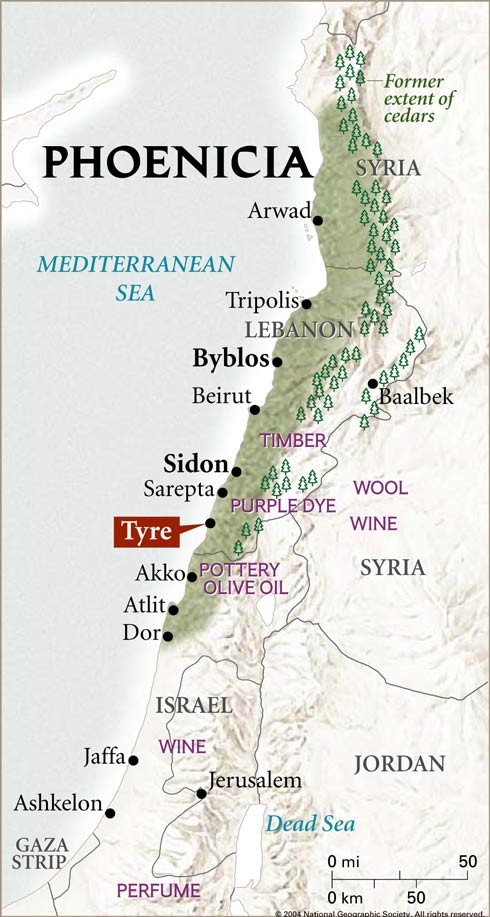
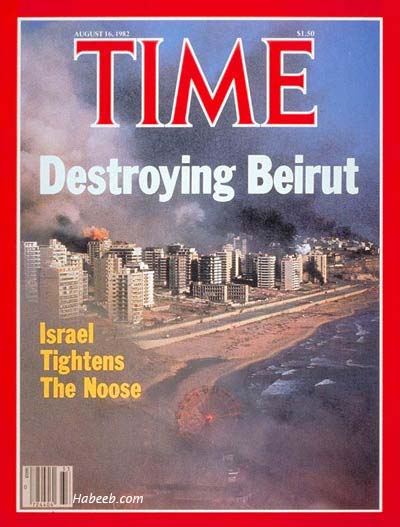
Israel's invasion of Lebanon in 1982 probably opened the gateways for knowing the Israeli army for the truth it is: a racist army. Israel, amidst mass media, invaded Lebanon. Its atrocities were covered by several journalists, and these same journalists complained that Israel tried to force them to write "its' version" of the war. With Sabra-Chatila massacres taking place, Israel, as a beacon of democracy in the image of the West, fell. This of course was a concrete reference on Israeli behavior. People wondered who was the real democracy: Israel that focuses on Judaism as an ethnicity trait, or Lebanon: the homeland of 18 sects co-existing with each other till the civil war broke out.

Currently, more and more scandals are published on Israel, past or present. The world's shrinkage through the mass communication and media revolutions means that if Israel slaps a Palestinian in its ground, the whole world knows. Israel may have held the upper hand in the media, but the other side of the coin is finding more and more space to highlight the reality of the region, and Israel's racist atrocities.
This was caused by the neo-Israeli historians who found the guts to speak. Benny Morris, a hard core Zionist, was condemned by different Israeli spheres for being a traitor, because he simply brought into light what happened in 1948. ILan Pappe had to flee Israel out of safety because he also accused Israel of ethnically cleansing the Palestinians.

The biggest example was probably the Israeli offensive on Lebanon 3 years ago. Israel was bombarding also the Palestinians as well. The reactions of Israeli offensive to Lebanon was highly condemned by mass demonstrations (part of the reason is the large Lebanese diaspora across the world), while the Palestinians were covered second. This lies in the fact that not everyday Israel bombed Lebanon, while the repetition news of Israel torturing Palestinians is new. The suicide bombings of some Palestinians across the 1990s gave Israel the pretext to behave under the banner of fighting terrorism. 9/11 also gave it the flexibilities to commit atrocities and massacres on the remaining Palestinians. This is changing.

With the offensive on Gaza 2009, several Israeli figureheads are getting cornered. The voting on the Goldstone Report in the UN highlights to what extent the world is fed up from Israel's butcheries. They still as arrogant as possible. They accused the entire world as "immoral" while only few states were "moral". Why? Because the majority of the world was disgusted with Israel's atrocities on the Palestinians. Luckily for Israel, the veto power always saved them.

Now, in 2009, when you say Palestinian, it is no longer: "non-existent". (PS: Times Square in New York has a gigantic road called Golda Mair St.), or terrorist. It is the struggle for existence. Israel's campaign of equating the Palestinians to terrorists is failing. More Israelis are speaking out against their racist government, and more people are informed of what is going on globally. Those who hate the Palestinians or believe that Israel is the suffering state for 2500 years are under bombardment of criticism, and the center for mockery. Palestinian these days means the exact definition of the fight for Human Rights. The fact the world is seeing the fanatic religious Jewish settlers, with their angry beards and automatic machine guns, brings the question of who is really the religious fanatic? The Palestinian Muslims? (Israel always attempts to omit its atrocities and racism towards the Palestinian and Arab Christians to avoid losing support from the Christian fanatics in the West). The fact the International Courts are tightening the knot on Israeli warcriminals is a beginning.

The battle for existence continues, and Israel is failing to do anything about it. If anything, they only have their superior airforce bombardment of innocent civilians and the veto power. At this slow rate, the way I see it, Israel is going to enter dark times. Other than the United States, we seriously do not see any media blackouts on what is happening there. And even in the United States, the alternate media of the truth is gradually breaching Israeli barriers.

MFL

Wednesday, January 21, 2009

The Zionists: Philosophy of Fear and Hatred (Part I)

A Little Knowledge is a Dangerous Thing ~ Alexander Pope

Olmert's Speech

It came no surprise that Olmert's seize of fire justified Israel's butchery of 1200 Palestinians in the sense of the IDF defending the victims against terrorists. The timing of Olmert's 'unilateral' seize of fire was also perfect. He secured three goals through bloodshed:
• Making use of Bush's presence and unlimited support to Israel's atrocities till Bush's final moments
• Sending a signal to Obama that no one will obstruct Israel's bloody policies
• Making use of the International Media where all world attentions were focused on Obama's elections instead of the evidence of Israel's genocidal policies on the Palestinians after the media was more loose to wonder around Gaza.

This reflected on Obama's speech, where he mentioned global peace and hope, while not mentioning anything on Israel and Palestine, specially on the recent butcheries that took place. Luckily, U2 where there two days earlier to remind Obama on the Israeli/Palestinian question.

Fear of the Other: A Look at the Terrorists

Israel as always successfully integrated the fear of Palestinians. The nation of Israel is fully convinced that they live in the middle of an ocean of war mongrels of barbarians. The sporadic attacks of the Palestinians on the Israelis are depicted as terrorist attacks on a nation that wants to live peace. What the story is untold is the exact history on how Palestinians of 1948 were expelled from their homes, and the butcheries never stopped since that day. Almost on daily basis, Israelis are free to run, shoot randomly couple of Palestinians every day, and then argue that they were shot at. That was the case in 1948, and that is the case today. 9/11, where everyone assumes that the Arabs celebrate that day, was the greatest bad news for the Arabs. 9/11 brought the justification for Bush and Israel to do any activity they want in the name of "War of Terror" and open a full scale war under the banner of "Pre-Emptive Strikes".

Tarek Ali, in his book Bush in Babylon: The Recolonization of Iraq, divulges the primary reasons why Palestinians become militants. For these people are the terrorists that Israel is supposed to defend. This phenomenon is universal for the Israelis, bomb your victims to kingdom come, and drive them to join a militant group, which represents a liberation movement, and dub it terrorism.

" By making Ariel Sharon a co-leader in the 'war against terrorism', the regime in Washington consciously blurred the distinctions between national liberation and terror. The result has been catastrophic. Not a day passes without an email from Israel and Palestine informing me of the latest atrocity. The material on my computer would fill two large volumes if it were presented as evidence before a war crimes tribunal. One of these emails arrived on 9 July 2003 and is less typical because no young children were killed. It was sent to me by Palestinian Monitors:
In the early hours of this morning Israeli Special Forces and soldiers entered the West Bank town of Burkin, killing one man, seriously injuring his wife and arresting another Palestinian man. The Israeli army claims that they were fired upon when entering the village, so they returned fire, however according to Palestinian witnesses this is not true.

The Troops entered the village and went to the house next door to ours. My wife and I were sleeping on our roof when suddenly we heard some shots. We immediately entered our house. The shooting ended as soon as it began – only about four shots were fired. About 10 minutes later our door bell rang and it was Iyad and his wife. They had crawled to our front door, covered in blood and still bleeding. We called for an ambulance, and eventually it came. The medics said the soldiers had stopped them for only about 10 minutes.

We went over and spoke to Iyad's father to see what had happened and he told us the soldiers had entered his house and arrested his 20-year-old son Fadi. Iyad, his other son, and Khaloud, Iyad's wife, and their three children, were sleeping on a bed in the garden as it was too hot in their house. When the soldiers left after arresting Fadi they must have seen them and opened fire. There was no shooting from the Palestinians – just the Israelis. We saw the mattress where the couple had been sleeping and it too was covered with blood.

Iyad later died, according to the doctors at Rafidiya hospital in Nablus, from bullets to his throat and arms. Khaloud was shot in the face, and is currently in hospital in a critical but stable condition; their children, the eldest of whom is five years old, escaped uninjured.


With this going on every single day since 9/11 how can any thinking person be surprised that young kids are desperate to join one of the militant organizations resisting the Israelis. There is a purity and moral integrity in children that illuminates a struggle. A single hair on their head is worth more than all those who sit in judgement on them, let alone their killers. " (Tarek Ali, Bush in Babylon, Verso 2003 – Page 13 – 14)

Joe Sacco, during his visit to Palestine, quoted several Arab Jews arguing that Zionism came from Europe. The British mandate recorded several procedures of extortions of Zionists on local Palestinian Jews whereby the latter were forced to recruit Jewish labor and expel their own Palestinian Arab friends from their farms. The Ottomans' legacy also included tolerance and coexistence, which was more than comfortable for the World Zionist Organization to visit the Sultan and attempt to purchase Palestine. Of course, the final 9 years of the Ottoman empire changed radically when the nationalist Young Turks revolution took place. Bottom line, the policies of the Zionists, and their revisionist counterparts of Vladimir Japotinsky, stressed on expelling the expulsion of the local inhabitants of Palestine, and secure it to the Jewish nation. Hence, from their first moments of arrival to Palestine, their philosophy rotated around imposing the ethnic line. Suddenly, Palestinian Christians and Muslims suddenly found themselves gradually kicked out of their homes in Jerusalem, and elsewhere. Any Jew who didn't follow-up their program, the Zionists had all the means to extort and threaten the non-Zionist Jews.

King-Crane Commission and Lord Grey's Anti-Zionist Approach

As a revolutionary Marxist obliged to reconstruct history as it happened, we shall begin with the Zionist claims that Palestine was empty, The Zionists also had their cover-up in Europe. Supported by their vast network of contacts, and their advanced organization allowed them in World War I, the Zionists were able to receive offers from both, the Germans and the British, in regards to Palestine. Eventually, their socialist infrastructure allowed them to organize themselves better than the Palestinians who just immerged from the Ottoman dominion and jumped into British brutal rule and biased support to the Jews. As riots started to spring in the early 1920s and climaxed in 1929, the Zionists' propaganda was in jeopardy, Palestine was not an empty desert. Nevertheless the King-Crane commission proved the British wrong, sadly their advices were not listened to, and it meant that the ethnic cleansing of the Palestinians would begin shortly after the Versailles treaties. The report and statistics of the Commission were as follows (after visiting Palestine in 1919):

Out of 260 petitions in Palestine:

For Complete Zionist Program: 7 Petitions (2.7%)
Modified Zionist Program: 8 Petitions (3%)
Against the Zionist Program: 222 Petitions (85.3%)

The recommendations of the Commission actually warned against the implementation of the Zionist Program, which was facilitated by Lord Balfour, by saying:

'For a national home for the Jewish people is not equivalent to making Palestine into a Jewish State, nor can the erection of such a Jewish State be accompanied without the gravest trespass upon the "civil and religious rights of existing non-Jewish communities in Palestine.'

The Commission also accused Zionism of breaching the very concept of Woodrow Wilson's 'Right for Self-Determination', and warned against the implementation of the Zionist Program, whereby they argued:

"If that principle is to rule [US President Woodrow Wilson's Self-Determination], and so the wishes of Palestine's population are to be decisive as to what is to be done with Palestine, then it is to be remembered that the non-Jewish population of Palestine – nearly nine-tenths of the whole – are emphatically against the entire Zionist program. The tables show that there was no one thing upon which the population of Palestine were more agreed on this." (in regards to the numbers given above)To subject a people so minded to unlimited Jewish immigration, and to steady financial and social pressure to surrender the land, would be a gross violation of the principle just quoted (Wilson's Self-Determination), and of the people's rights, though it kept within the forms of law.

They summed the demands of the Palestinians as follows:

"We oppose the pretentions of the Zionists to create a Jewish commonwealth in the southern part of Syria, known as Palestine, and oppose Zionist migration to any part of our country for we do not acknowledge their title, but consider them a grave peril to our people from the national, economical, and political points of view..."

The Commission recommended that the Zionist program be reduced drastically, : " In view of these considerations, and with a deep sense of sympathy for the Jewish cause, the Commissioners feel bound to recommend that only a greatly reduced Zionist program be attempted by the Peace Conference, and even that, only very gradually initiated. This would have to mean that Jewish immigration should be definitely limited, and that the project for making Palestine a Jewish commonwealth should be given up."

In Parallel, Sir Edward Grey, who was Foreign Secretary of the British Empire from 10905 – 1916, exploded in the House of the Lords in regards to the Balfour Declaration: "It promised a Zionist home without prejudice to the civil and religious rights of the population of Palestine. A Zionist home, my Lords, undoubtedly means or implies a Zionist Government over the district in which the home is placed, and 93 per cent of the population of Palestine are Arabs, I do not see how you can establish other than an Arab Government, without prejudice to their civil rights."

And prejudice was the correct term but the application was ethnic cleansing. The British mandate played a massive role in giving the Zionist Jews the right mechanisms.

Lt. – Col. W. F. Stirling, British Army Officer and Chief Staff Officer under T.E. Lawrence as well as ex-governer of Jaffa/Yafa) gave important testimonies on the riots that broke up that year in Jaffa (called in Arabic Yafa). In reaction of Jewish colonies expanding by that year, riots broke up between the Arabs and Jews:

"The [Balfour] declaration, however, coupled with the attitude of the Jews, caused the Arabs to fear an eventual Jewish domination; for while in stated that the British Government favoured the creation of a Jewish national home in Palestine, the Jewish interpretation of it, which was openly preached, suggested that we favored the conversion of the whole country into a national home for them. The Arabs, not unnaturally, took alarm. Poor an dinexperienced, they saw little chance of competing against their rivals, who were rich and clever, and who were also, as it seemed, being supported by the powerful British Government."

Riots broke out, while the government ordered that Hebrew, English, and Arabic to be used, the Zionist section refused to use the Arabic words. It is, in their nature, to divide the population as Jewish and non-Jewish. "Atrocities were committed by both sides, and some Arab women lying wounded in the fields were seen to have their breasts scythed off by Jewish colonists."

A final quote I will borrow from Stirling is on the ethnic character of Zionism. Most of the Jews were not Zionists, they regarded their fellow Christian and Muslim friends as colleagues. As I always mentioned, Zionism is the greatest bad news for Judaism. It is not recent that we saw the Orthodox Jews opposed Zionism. Zionism despised equality of the inhabitants of Palestine, and imposed this racial segregation:

"In the early days there were many Jews in Palestine who were not Zionists, but the pressure applied by the Jewish Agency became so great, and its Gestapo methods so severe, that few Jews dared openly express any other faith. Just before I left Jaffa a very important Jewish farmer from Richon-le-Zion sent a message asking if he could come and see me. I accordingly invited him to come to my office the following morning, but he refused to do that and asked for an appointment at my house after dark.

When he arrived he told me he had come to ask for my advice on a personal problem. He explained how, as a small boy, he had been brought to Palestine by his father, one of the biggest landowners of his village. Growing up there, he had made numerous friends among the little Arab boys of his own age. On his father's death he had taken over the property and naturally continued to employ his boyhood friends as herdsmen, ploughmen and teamsters. That morning, however, the Jewish Agency had ordered him to dismiss all his Arab employees and to engage some newly arrived Jewish immigrants at a wage-rate far excess of the pay of his Arab workmen. What should he do? If he dismissed the Arabs in the summary manner suggested, such bad feeling would be created, being a vindictive people, they might well burn his crops. Apart from this consideration, they also happened to be his friends. The Jews who had been proposed to him as labourers knew nothing about farming, and certainly nothing about the local conditions. The Arabs would work to all hours of the night if it were a question of getting a crop in before the rain; the Jews would down tools precisely at six o'clock, no matter what the weather. He now saw no possibility of working his land on economic lines, and he would inevitably go bankrupt." (Walid Khalidi, From Haven to Conquest, P. 219 – 237).

In his notebook, C.R. Ashbee (British Architect, Civic Adviser to the Palestine Administration), wrote:

"There is then the effort of clearing up and rebuilding a country, and the city of Jerusalem – for here the part is always greater than the whole – a country which to all men has a strange unreal sanctity. Palestine for most of us was an emotion rather than a reality."

"There was next the half-generous, wholly ignorant impulse, that this, as we English thought, empty land, this no man's land, this land lost to us when were last there in the days Edward Longshanks, might as we had now conquered it of the Turk be tossed to the Jews. So we thought."

"There was then – and here came the rub – a certain chivalrous reaction, and it came with greater knowledge. This country, it appeared, belonged after all to other people and they, too, had helped us win the war [WWI]. Who were these other people? What right had we to mortgage their inheritance? Might it not be a breach of trust? We have recently begun to find out the truth, to answer some of these troublesome questions."

The greater knowledge, clinging round the word "self-determination," came as an eye-opener. It showed us two things: first, that we were after all, as far as Palestine was concerned, only a part of Christendom; Greek, Italian, French, German, Russian, also had a share in the Holy Land, perhaps a greater share than we, even as St. Bernard, St. Francis, and St. Louis did more for Palestine, and meant more for the world, than Richard Coeur-de-Lion or Edward Longshanks. It showed us next there were also the Arab and the Moslem to be reckoned with, him to whom the Holy Land actually belonged , to whom the Holdy Land was equally holy, and whose record and achievement it – Amr, Abdul Malek, Al-Mamun , Saladin , Kalaoun , Kait Bey – were far greater than ours. We were learning a little history. "

Next Chapter: Roots for Zionist Tactic of the Modern Day

Friday, January 16, 2009

The Doha Conference, A Great Divide, and A Whirlpool of Ironies

The Doha Conference:

'They come in fancy planes while the people are dying...'

As the number of Palestinian casualties jumps to 1133, those rotten Arab countries so far offered nothing to Palestine. Just as Israel got away in dissecting the West Bank, the massacres of Gaza are exceeding all forms of butcheries. More than 20 Palestinians had been located under the ruins of a building, which means some of them died out of suffocation. Of course, this is dubbed self – defense by Israel.

Conferences and more conferences

The split of the Arab League peaked officially today. Saudi Arabia and Egypt clearly displayed their muscles by blocking the Qataris from having a quorum to meet under the patronage of the Arab League, and take decisions in that regard. This however doesn't mean Qatar is a weakling compared to the former two. Qatar managed to gather 13 voters within the Arab league despite Egypt and Saudi Arabia's obstructions, even though that was not enough to hold a quorum. The Saudi Regime and their allies the Egyptian Regime never forgave how Prince Hamad bin Khalifa al-Thani took the lead in spearheading a Lebanese Dialogue that brought a temporary peace to Lebanon.
Meanwhile, Abbas still argues that the peace treaty is under threat, and still unaware that there never was anything called Peace. The Israeli war-machinery never stopped to do peace. Elsewhere the Doha conference kicked off in order to discuss different means of halting the war. Again, no results, but interesting headlines popped out.

Hamas's Mishaal was present, which is natural. Where there is no Fatah, there is Hamas. Hamas repeated their insistence on halting the butchery of the innocent civilians. He argued that Israeli Forces should withdraw from Gaza, cut their war, end the blockade, open the routes of Gaza, and hold Israel accountable for their war crimes. He insisted on how the Palestinians are practically unarmed. He insisted on the time factor, where as they speak, more citizens are dying. Hamas had secured its representation of the Palestinian resistance and the sufferings of the people of Gaza. He also stressed on how Israel is trying to invent new realities, something that Rice supported. In her own words, the seize fire will not take place or else a temporary peace will take place and a new war. Nevertheless, she failed to mention who is the real aggressor on the issue. Mishaal also described the harsh conditions the people of Gaza are living through, and equated his resistance to that of Hezbollah where he argued that it was the same resistance that expelled Israel from the Southern Lebanese region and Gaza. He also highlighted that the resistance of the Palestinians is capable to achieve victory, mainly because they can remain alive after Israel bombed everything. Nevertheless, as I mentioned earlier, Israel's main purpose is not to dismantle Hamas, rather the Zionist country needs Hamas to gain more funds, arms, and settle internal scores in the elections. For example Ehud Barak jumped 17% in the Israeli opinion when the offensive started, which made him the primary competitor to Levni for the Prime Minister position. Nevertheless, Mishaal's pleas to save the Palestinians was fully felt, but the method he gave his pleas, with a steadfast position, allowed him to divulge the charisma he has. Unlike Abbas who is begging the international community to send an international force, similar to UNIFIL, but to bring Hamas under control so that he can live in peace Israel; hence disregarding all the demonstrations that took place in the West Bank in solidarity with Gaza, to which he barely expressed anything.

I have to admit, what nerves of steel Meshaal displayed, specially in less than 24 hours the Israelis killed his colleague, Hamas's minister of interior Said Siam, along with his brother and son.

The Syrian President

The Syrian President spoke next, as always, he took the leadership of opposing the Israelis and fighting for the Arab cause. He gave credit to the Lebanese resistance for defeating the Israelis in 2000 and 2006, and how both the Lebanese and Palestinians are exporting the spirit of resistance to elsewhere in the Arab world. Indirectly, he separated the Arab world to those who surrender, and those who are resisting. He also argued how those who achieve peace by resisting an occupier, and those who accept peace in seeking their own interests. He also, to give himself credit for the July war, also stressed on the importance of standing next to a country. Although as far as I remember, Syria made money on Lebanon's expense due to the July war, he refused to open a front on his side, denied any Israeli missiles falling on Syrian grounds, and probably the credit he takes is using his land to smuggle weaponry to Hezbollah and their allies.

Nevertheless, the Syrian president, in my personal opinion scored highly in the face of other Arab leaders. While it is true that the majority of the Arab citizens are frustrated by their helplessness, he used the 1970s language of the 'Arab revolutionary' where he summarized that time is not on the Israeli side, but he got philosophical on how each generation becomes more wrathful to Israeli brutality. Throughout his speech, he also hinted to Egypt and Saudi Arabia on their unwillingness to do anything about the on-going massacres. He also expressed the distrust of the Arab world in the International Court to hold Israel accountable.
Finally, his contribution to the summit is by suspending the indirect negotatiations with Israel, spoke in an apocalyptic manner in regards to Gaza and the Golan Heights witnessing a new victory, and the importance of funding the Palestinians with all means possible, ranging from materialistic aid to moral boast.

Lebanese President

The Lebanese President, Michel Suleiman, was next to speak. Unlike the days of Emil Lahoud, for once the Lebanese President's speech was different than what the Syrians wanted him to deliver. The other side of the story, Michel Suleiman's travel to Qatar was dubbed as Hezbollah and Amal imposing their demands on the Lebanese President to travel. Nevertheless, the speech he read in Doha was quiet different. Again, the Suleiman succeeded in copy pasting demands of what was known as the 'Opposition' and 14th of March demands. The Prince of Qatar, Sheikh Hamad bin Khalifa, back in the July war was regarded a 14th of March supporter, now he is regarded as an 8th of March follower.

President Suleiman's speech began with how Lebanon 'victoriously' extracted UN resolution 1701, and insisted on how Israel continued to breach it. He gave credit to the Lebanese citizens, the Lebanese resistance, and the Lebanese army for crushing the Israeli offensive of 2006. Nevertheless, Suleiman's speech rotated around on keeping Lebanon out of war with Israel, and stressed on how Lebanon's role is non-alignment, whereby its role is to tackle those rifts in the Arab World. Of course, he didn't give any hints on Egypt, Saudi Arabia, or any other country, rather projecting on how the Arabs should be united and gave a long-run period for that, which till then probably half of the people of Gaza would be killed.

Nevertheless, being a president of country that defeated Israel on three different eras, he had the aura to escalate, but didn't escalate beyond providing sympathy to the people of Gaza. Prince Hamad bin Khalifa hailed the President as being part of the resistance when he was the head of the Lebanese Army.

It has to be noted, that the Qatari Prince, and the Lebanese & Syrian Presidents, appeared while reading their speeches as if they are in the middle of an Arabic reading test. Other than Meshaal's eloquent Arabic, the others repeated several times Arabic words, and corrected grammar rules as they read.

The Moon Islands , Mauritania, and Iraq

The Moon islands are a couple of small islands that were glued into a republic. While repeating the atrocities of the Israelis, and like the earlier presidents, blamed the Arab leaderships for taking so much time in taking any actions, proposed to form a committee from the attendees, and tour around the major players in the International Community to raise awareness against the Israelis, and properly to unify media efforts in exposing the Israeli brutality, mainly to the Western audience.

Mauritania was probably the most hilarious country of them all. Just recovering from a military coup and preserving a peace treaty with Israel, all eyes went on the speaker. Nobody understood anything what he said, as his Arabic was rather very weak, and he didn't discuss anything about cutting ties with Israel. He did condemn the Israeli brutality, based on what was understood, but that was it. Everyone issued relief sighs of 'Thank Heaven the torture is over' when he finished.
The Iraqi Vice President was next, as much as he condemned the Israeli aggression, he reiterated Iraq's historical role in standing next to Palestine. Nevertheless, he didn't express anything about the US intervention in Iraq, nor whether Iraq as a nation state still exists theoretically with all the cantons present there. But I also realized that their minister of education was targeted in a bomb there, and I wondered for how long this man will stay alive.

Iran's Ahmadinejad

As probably participating as a guest, he expressed his ideas as well. We all know what Iran's role in arming Hezbollah, and giving them the right technology in beating Israel's ass out of Lebanon, then watching how their infantry were sitting ducks to Hezbollah's warriors. Who would thought that those Merkava tanks are destructible? Not complaining on seeing a popped out tank of that caliber. Yet, the Iranian president repeated the same words where Israel's attrocities in Lebanon and Palestine had been repeating themselves for so long, and demanded that the leadership of Israel should be held in a court.

In Parallel...

The Arab League's official meeting of foreign ministers FINALLY agreed for calling the opening of the borders of Gaza. In a nutshell, that is the biggest crap I ever heard for a while. After three weeks of butchery, the Arab League till this day simply issued out such a decision? After what, 1133 (so far), had been killed, and over 5000 wounded? Isn’t it ironical that such decisions come out when Israel is so close to accept a seize fire agreement? That doesn't stop the butchery of the Palestinians...

Collisions also took place in the West Bank between the Palestinian Authority and Hamas. In a large demonstration in solidarity with the people of Gaza, a small group raised the flags of Hamas, where the PA security beat and arrested them. Hence, Abbas reinforces the division between Fatah and Hamas. BBC's article, under the title of Gaza and West Bank: Growing Divide explains it in a nice way.

Bush's final speech:

Bush hailed himself as giving democracy for different countries; some of those he named were Lebanon, Kosovo, and Iraq.

I accuse Bush of being the biggest liar the world has ever seen, and makes Saddam Hussein look like an angel next to him. For starters, Bush didn't do anything to Lebanon, he sold out on his allies (yet again) the 14th of March, leaving them stranded in the middle of nowhere. The expulsion of the Syrian army didn't come from Bush, rather a strong reaction of the Lebanese on the assassination of Harriri and the fact they were fed up from their crap. As a matter of fact, it was his 'Green Card' to the Israelis that allowed all those Lebanese and Palestinian citizens to flourish.

Kosovo was totally irrelevant to Bush's policy, It was Bill Clinton's policy to the Balkans that gave Kosovo its independence, amidst never-ending chaos in the Balkans that secured Kosovo its independence.

Finally, Iraq, Bush gave them no democracy at all. He shattered a country into a three way ethnic divisions, and gave the al-Qaeda the space to crawl into Iraq. His war on terror cost the Iraqis over 650,000 citizens, and that was prior to the execution of the tyrant Saddam. He waged a war on Iraq under the banner of saving the Americans from weapons of mass destruction which were never found, then turned out Jesus inspired him. He also ruined the US economy, which in turn ruined the global economy by spending over 800 billion dollars a year on upgrading weapons, and producing unneeded weapons that no way a group of Qaeda or even the Iraqi regime was able to counter.

Democracy in Bush meant also to support the Moubarak regime, the Saudi regime, and the Jordanian regime. This led the Muslim Brotherhood in specific to grow even stronger in Egypt, while Saudi Arabia's instability is growing even more.
I will tackle his farewell speeches in details. But I would like to add one note: Afghanistan:

His 'War on Drugs' prior to his 'War on Terror' made him a buffoon in protecting his own citizens, when he was warned. Earlier US Administrations funded the Taliban who were actually needed to counter the Soviet invasion of Afghanistan. Actually in a period of four months prior to 9/11, he disregarded the issue of Bin Laden wanting to strike the US, and gave the Taliban government almost 45 million dollars in fighting drugs and opium. Ironic, isn't it?

Bush is responsible for almost every civilian's death that took place, for promoting dictatorships, and even funding terrorists like al-Qaeda. So the hell with you Bush, and I sure wish there is a hell, to see you rotting in it.

Thursday, January 08, 2009

Who To Blame for this Israeli Ethnic Cleansing of the Palestinians?

Imagine This:

People are cornered in cities, towns, and villages; the army is bombing based on ethnicity and sect. The people have no space to run. Borders are closed for refugees, and the army has the orders to shoot to kill anyone who was not of their sect. Victims' bodies are carried by the hostile army in dozens, with bulldozers, and dumped in large holes; then the same bulldozers, carry the soil, hide the hundreds of bodies of normal citizens in the ground. No border was open for them, except probably for one, and starvation has spread around. The hostile army argued that they were defending themselves against the enemy, and always promoted that these Muslims cannot tolerate civilization. They live to rape their women. This was for them a battle, two races stuck in one border. That army refused to abide by international warnings against such ethnic cleansing.

The whole world, without exaggeration, was shocked. The UN called for immediate seize of fire. Bill Clinton was ready to send his airplanes to support the underdogs. London was prepared to send its forces. Eventually the army was bombed, and the man who gave the order for ethnic cleansing was sent to the Hague Tribunal. That man was Milosevic, and the people were the Muslim Albanians of Kosovo. Now, isn't that ironic if we compare the situation to Gaza and the Palestinians?
Lost their homes to a European form of racial colonialism, the Palestinians were stripped from their homes, their lands, and their basic rights. The Zionists came from Europe with the sole mission to expel the Palestinians out of their homes, committed the first recorded ethnic cleansing directly after World War II, and established a racist nation called Israel, where the Zionists argued they are restoring their homeland which they lost 2000 years ago, and they are still on a mission to re-unite a Diaspora that is even 2500 years old.

The Story of Gaza: A Twist of Events

For those who wonder how the Palestinians received self-autonomy, amidst Israeli brutality, in Gaza and The West Bank; the story rotates around Arab treason.
When the 'glorious' Arab armies entered Palestine to liberate the Palestinians from the genocidal policies of the Hagannah , the pre-infrastructure to the Israeli Defense Forces, they raised the banner of the Arab Cause. The Arabs at first overwhelmed the Israelis, and the Jordanians took over the West Bank. Surprisingly, the Jordanian Army, whose king was a puppet to the British Mandate, ordered his army to a halt, and started surprisingly negotiations. He took mandate over the West Bank. The head of the Egyptian Army, the soon to be president, Jamal Abdul Nasser, took a look at the Jordanian acquisitions, decided to do the same, and halted at Gaza. Unlike the Jordanian King though, with less fronts for the Israeli army to worry about, Abdul Nasser, had to pull an urgent defensive maneuvers, and sustained heavy casualties. Abdul Nasser blamed the Egyptian monarchs for supplying the army on purpose corrupt weapons. Nevertheless, Egypt got its control on Gaza till the 1967 wars. The rest is not important for the current research, but we will hop to the Oslo Agreement of 1993. Under the patronage of Bill Clinton, Israel's Isaac Rabin, and Yasser Arafat, the Palestinians were given Gaza and the West Bank, as a quasi state to run, in attempt to create two states within one borders of historic Palestine. I will not dwell also on my opinion of the Oslo agreement, but it is enough for me to accuse Arafat of treason for selling out most of the refugees' right of return to gain semi presidential powers, this includes also my mother's right to return to her home.

The Hamas and Fatah Dance

Back in the 1970s, the Israelis had a short run strategic management. Back in the 1970s, Israel's arch-enemy, the Palestinian Liberation Organization, were fought fiercely because the PLO brought international recognition for the Palestinians. The different factions then were Arafat's Fatah, George Habash's The Popular Front for the Liberation of Palestine, and Ahmad Gibreel's Popular Front For the Liberation of Palestine – General Command. Their funding came from some gulf and Arab nations, and the Soviet Union in terms of arms and weaponry. Fatah were dubbed as one of the most dangerous terrorist groups back then, and no US diplomat supposedly was allowed to meet with a terrorist group. As a matter of fact, during the 1982 Israeli invasion, the American Presidential Diplomat, Philip Habib, threatened Sharon to cut down on his bombing by meeting with Yasser Arafat face to face.

One of Israel's tactics to weaken Fatah's influence and their secular allies, the factions of the PLO, was to strengthen the Islamist groups. Hamas, at its moment of birth, was not an entity or a party of its own; it was and currently stills a military wing of the Muslim Brotherhood. As a matter fact, Hamas, during the first Intifada, was the alias name or a camouflage of the Muslim Brotherhood in Palestine, in 1987. The Muslim Brotherhood started officially around 1943, their roots dated back much earlier, and as an influence from the Muslim Brotherhood in Egypt.

Unlike the Egyptian Muslim Brotherhood, the Palestinian Muslim Brotherhood had a national character while in Egypt they promoted the universality of Islam across borders. They collected funds based on the Quran in order to expand their spheres of influence in East Jerusalem, the West Bank, and Gaza. The Israelis, promoting then that their civilized citizens were under-threat from barbarians in order to hide their own atrocities. From this tactic, it is not surprising that a large population of the US citizens who are actually interested in Middle Eastern issues are pro-Israel and Zionism. Their media reports one side of the story, just as today. The International Media, at least the influential ones, do not show the 650 bodies of martyrs (at least the number last I checked), rather how one Israeli woman is crying. Only when Israel commits a big blunder live on an American or British TV, a reaction rises. Now, returning to the story of the Muslim Brotherhood, they were back then the quietest type. They never launched any activities against the Israeli, but they did fight the PLO with all they got, after all they were their rivals. The purpose of not doing any activities against Israel was the Islamic belief to win Israel in the long-run. Israel, turned a blind eye on the Muslim Brotherhood as they constructed their Islamist nodes, and expanded on the expense of the PLO, and primarily Fatah. In 1977, Fatah bluntly accused the Muslim Brotherhood as Israeli agents. What the Israelis didn't consider that the Muslim Brotherhood will be their archenemies, and definitely the Israelis last they expected was to be allied to Fatah in present times... something that I like to call an Irony of Situation.
In 1987, the Palestinian Intifada uprisal took place. The main trend was the circumstances the Palestinians were living in. While the PLO had little control over, an inner coup took place inside the Muslim Brotherhood. The younger generation decided to disengage away from the quietest approach of opposing Israel, and decided that the their time has come to be engaged. In order to safeguard the Israeli loose hand over their movements, they invented Hamas. Operations carried out by the name Hamas bluffed Israelis for a brief moment, but Hamas emerged as a powerful opponent to Fatah. Actually, Fatah turned a blind eye back in the early 1980s as Muslim Brotherhood extremists took out Habash's comrades, which allowed them greater strength on the ground. The end result of course for Fatah was victory in the end of the Intifada in 1993, whereby the Oslo Accords were signed. Fatah was successful in attracting international attention to Palestinian suffering, especially where children were captured live on TV being shot at while throwing stones. This allowed Fatah to emerge as the negotiators under the banner of Peace for Land, and got the current semi-autonomous state.

Yasser Arafat's relationship with the Israelis wasn't on the best of terms. At a one point, Ramallah was over-run by Israeli tanks, and he was under siege in his own office, and last two years in Ramallah. The Oslo Accords even got Arafat, along with Rabin and Peres the Noble Peace Prize, but other PLO factions, primarily the George Habash faction of the PFLP, accused him of being too softy with the Israelis. This trend started in 1988, when Arafat accepted UN Security Council Resolution 242, which was to recognize Israel's rights for existence. His main opponents were Hamas. By 2002, around 35% of the Palestinians were dependent on Hamas's welfare nodes, whom they attained through the Muslim Brotherhood.

Hamas and Fatah: The Collisions with Each Other instead with Israel

Third World Politics rotate around declining long-run strategic goals for short-run political gains. The same is applied on Hamas and Fatah, even though currently Hamas evolved to be the representative of the Palestinian will to survive, like Arafat's PLO in the 1970s, even though he always collided with George Habash and the pro-Syrian Ahmad Jebreel. The suicide bombings of Hamas always instigated Israel to go punish Arafat, but with his death, Hamas gathered the storm to balance out against Fatah inside the Palestinian grounds. It has to be noted that in Lebanon for example, the majority of the Palestinians, at least prior to their latest butcheries on the Palestinians in Gaza, are pro-Fatah and Yasser Arafat.

Hamas, instead of limiting their activities to warfare and welfare against the Israelis, they became involved in politics. They harvested more supporters that way because every time Fatah messed up in the Palestinian parliament (to be noted: almost half of the Palestinian Parliament currently are in Israeli prisons). Operations against Hamas leadership escalated where in broad daylight its leadership were bombed by Israeli planes in 2004, but, Hamas continued to gather opposition whether through their welfare networks, using the easiness of their location in the Opposition to criticize Fatah, and offer themselves as an alternative. This was facilitated to the Palestinians through the weakening of the PFLP party by Fatah, Hamas, and the Israelis. Furthermore, the latter contributed in imprisoning PFLP's Ahmad Saadat. Fatah lost a lot of figures as well after the Oslo Accords, the first to abandon the PLO was Edward Said, who denounced the Oslo Accords immediately. Other Palestinian intellects lost grounds as well. Finally, the large gap left by Arafat's death meant practically undisputed political figure in the scene died with a weakling like Mahmoud Abbass taking over. Even though Arafat declined a lot to the Israelis, Abbas was even worse. As a matter of fact, Israel paid for its non-strategic calculations of the 1960s and 1970s of giving free passage to the Muslim Brotherhood, and selected Abbas as its ally. As a matter of fact, they publicly supported Fatah, along with the White House in the next elections.

When Hamas won the majority of parliament, they didn't sweep in a landslide. The matter remains that Hamas remained Islamist in nature, despite the fact it distinguished itself from other Brotherhoods by stressing on Palestinian identity and nationalism. The primary factor, on the other hand, for Hamas's victory bottoms down to the fact that people were fed up from Mahmoud Abbas's acceptances of Israeli pressures and even adopted speeches promoted by the Pentagon, such as "Peace, and Democracy". Since the options are similar to the US electoral dual competitive coalitions, Hamas in its position as the Opposition, made it as a majority block to the Parliament. Hence, there was a Fatah President (Palestinian Authority) represented by Abbas, and a Prime Minister represented by Ismael Haniya.

Just like in Lebanon, both factions didn't agree with each other. Peace treaties pop up, which are automatically are accompanied with Israeli brutality in East Jerusalem, bulldozers to expand on settlements, and mostly, day to day atrocities. Just like Lebanon, both sides accused each other with treason. Fatah accused Hamas as being a pawn for Iran, and Hamas accused Fatah of being US agents. Fatah received reinforcements when Israel arrested the Palestinian Parliament, and also Israel on different occasions released Palestinian prisoners that are members of Fatah. On one day, Hamas succeeded in kidnapping an Israeli soldier, which caused the entire Palestinians to live under hell, ironically, after the bombing, they decided to seek negotiations, leaving several Palestinian citizens dead. The exact scenario replicated itself in Lebanon when Hezbollah kidnapped two Israeli soldiers, and Israel bombed the hell out of Lebanon. Only difference though between the two incidents, that the ground forces of the Israeli Defense Forces appeared weak compared to Hezbollah's paramilitary operations; Hezbollah even inflicted severe damage on their naval power.

Same Butchery, Different End Results

The tactic of bombing citizens, and inflicting maximum damage on the Palestinians had been the same tactic of Israel for three decades. Israeli genocidal warfare is usually covered by media blackout on the 'other side'. The Europeans and Americans in general receive 5% of the overall story of what is going on. The bombing of the Palestinians in retaliations of the kidnapped IDF soldier was probably to support Fatah and encourage Palestinians to seek the peace option. Peace so far, with the Israelis, had been fake. No peace is followed by racism, and reaction would trigger another reaction, in here means the Qassam and Grad Rockets. When Hamas and Fatah finally had a military show-down, Hamas over-whelmed Fatah, which caused Mahmoud Abbas to expel Ismael Haniya as the Prime Minister. Shoot-outs were bloody, and the Palestinians were shocked on the notion how two mighty Palestinian factions were shooting on each other, instead the Israelis. When the Gulf nations succeeded in reconciling Hamas and Fatah, the streets of Gaza and the West Bank were flooded with Palestinians hugging each other, and raising their fingers in a V form. This reflects the will of the Palestinians, to seek unity. Fatah till this very day is still incapable to compete with Hamas's welfare networks, and actually do not complain about it since these nodes save a lot of money on the tiny budget of the autonomous regions.

This was followed by a breakdown of further collapse of negotiations between Fatah and Hamas, Israel again enforced a blockade on Gaza, whereby over 50 citizens died in hospitals due to lack of electricity. The blockade lasted months. Israel remained expanding in East Jerusalem to compensate the dismantlement of certain settlements in autonomous grounds, after Israel disregarded the International Community. Again, Israel always failed to generate a real peace treaty. The current Palestine genocide, where the final round of missiles were shot by Hamas in reaction to Israeli brutality triggered the bombing of Gaza where we see about 75 to 80 citizens killed per day, and over 200 wounded a day.

Unlike the last bombing, this one is different. The Israelis for sure do not seek to dismantle Hamas; rather they always need an enemy. That is the case of every extremist nationalist ideology, like Zionism. While the people think that Hamas's very existence in Gaza is threatened, Israel wants Hamas, just as Hamas needs Israel. This is the very important tactic of demolishing reformist alternatives. Israel is certain that Hamas will emerge stronger after these collisions, and actually that suits their 'defensive' policies. Israel is not that stupid to wage a war that is clearly against Hamas, bomb randomly citizens, of whom, according to today's statistics: 215 children were killed,89 women murdered, with a total estimate of 680 killed in less than two weeks, and 3075 severely wounded. Entire families had been eradicated by a single bomb. Now of course, freaks like Bush, Levni, and Rice would call it "fighting terrorism". Yet how can a country, that was established on the expense of others, based its existence on ethnic cleansing, and form blockades on the most crowded region in the world (and poorest I might add), is natural. Israel was formed out of the blues. Its very existence is not natural, and there is nothing called "Natural Rights". Again, this proves that Zionism is the biggest bad news to Jews of the world, whereby they are a minority. Israel requires wars in order to receive funding, justify its on-going atrocities, and probably will never seize till that racist nation succeeds in attaining complete control of Palestine Proper. Finally, the notion of towns in Israel is totally ironic if that country is genuine, there is no country in the world that calls its urban centers as "settlements".

Arab Nationalism is Opium of the Masses

Just as the Arab countries sold out Palestine in the great Palestinian rebellion of 1930s and 1948, they are doing it again, and probably will continue to do it again and again in the future. The reason for this again lies down for Arab regimes in selecting short-run goals, which is the society's elites maximizing power for their own welfare at the expense of their people. This was applied on Jordan, Egypt, and Saudi Arabia in the 1930s; also Iraq then was included. Their entire rulers were under allegiance to the British Empire then, and it was no coincidence the rebellion then lost its momentum. The idea of giving false promises and empty words to maximize their own strength with stronger nation states had been the name of the game. The elites of these nations led the Palestinians to disasters, and of course, that was followed by dictatorships and poverty on their own people.

Just like the July War on Lebanon in 2006, the 2008 Holocaust of the Palestinians also was followed by Arab rulers who do not want to risk their personal interests at the expense of the murdered children of Israeli artillery. This includes almost every nation state except probably for Yaman who hit the streets in less than 24 hours to demand the halt of Israeli butchery, and protect the Palestinians. The other country is definitely Lebanon. The second most bombed country by Israel after the Palestinians. Several Lebanese had flashbacks of horrific Israeli brutality in 2006, 1996, 1993, and the 1982 invasion. This also doesn't exclude the people of the South suffering on daily basis from the Southern Lebanese Army and their masters, the different Israeli Prime Ministers.

The term Arab nationalism lost its value for almost two decades ago. Chomsky himself in the American University of Beirut said: "Which Arab and Israeli War, currently there are the Lebanese and Syrians." Even Syria itself is seeking its own interests at the expense of the Palestinians, by trying to get the Golan heights, not to forget how Bashar el Assad used the defeat of the Israeli infantry in the July War to maximize his bargaining cards (note: The Israeli airplanes flew above his head one month prior to the war in 2006).

Arab Nationalism, like most cross-nation states nationalism, are a thing of the past. Solidarity between the Arabs had been simply restricted on the potential level. It had been used between between rival politicians to distinguish themselves from each other. For example, the two dictators of Syria and Egypt had been competing with each other to argue who is more Arab.

Arab Nationalism on its first roots rose as a unified concept to face the different European Colonialist powers in Northern Africa and the Middle East. To others, Arab Nationalism was a great factor to block the rise of extremist Islamist movements. The first people to embrace Arab Nationalism in Lebanon for example were the Lebanese Christian Maronites, to counter the Ottoman Empire and specially during its final stages of existence: Post-Young Turks revolution. As a matter of fact, one naively argued that the ideological idea of Antoun Saadi's Greater Syria by Christians is due to the fear of the rise of extremist Islamists. To what extent that is true, we cannot have a concrete materialistic measurable output. Nevertheless, Arab nationalism was the banner for dictatorship leaders to rule. Abdul Nasser's entire logo was to unite Arab nations into a single nation. Something that is impossible to happen.

One major error in pro-Zionist supporters' is to assume that Arabs are the same. The some Western pro-Zionists wonder: "You Arabs have so much land, you can give Palestine to the Jews." That sounds rather plain stupid. It is as if saying, Europeans have so much land, why don't we give Hungary or Belgium to the Jews." To this I can say two errors:

1) The first error is to segregate the Jews as a single entity that doesn't belong in Europe, or Arab lands, whereby we both no there are European Jews and Arab Jews. Just as prior to the Balfour promise, there were Palestinian Jews, Lebanese Jews, Polish Jews, the same applies to Palestinian Christians, Lebanese Christians, or Polish Christians.

2) Just as Europe is divided into unique countries with their own complex dynamics, the same is about the Arabs. To deny the Palestinians' right to claim justice is a fatal error, and even worse, to deny them the right for existence, and practice the process of genocide on them under the banner of "natural rights" without giving history any real meaning.

Having said this, the notion "We are Arabs" had been an over-rated country. If you go to the US, the first thing that hits you is to see "the Lebanese Communities living together, Syrians together, and others together." By this , several distinctions can be separated. Now , when the Arab nation states say "We are Arabs", it means that they are simply alienating their people from real activism, which is developing class awareness and overthrowing those same corrupt rulers. Moubarak still hails Egypt as the defender of the Arab cause. Moubarak practically is a living proof why Arab nationalism is dead. His justification for not opening his borders with Gaza is "not to divide Gaza from the West Bank." When Nasrallah accused Moubarak with treason, his reply was "Everyone can testify to the sacrifices of Egypt", which according to my knowledge dates back to 1973. Probably, if his son manages to continue his father's reign like the Assads and the Saouds, our grandchildren will hear the same logos. Although I doubt that will happen as everyone knows that the Moubarak regime is close to erupt into a revolution any day within the decade or so.

What challenged the Islamists back in the 1940s and 1950s were the Arab Nationalists. The Arab Nationalists forced the Islamists to be marginalized. Egypt, Syria, Lebanon, and Pre-1948 Palestine were such an example. As those leaders delivered force promises on the "Arab causes", several people became alienated in order to earn their daily bread or out of fear from retribution from the leaders' oppressive regime. When the Arabs failed to demolish Israel, whereby only Syria and Egypt were involved in the 1960s and 1970s, this gave rise to the Islamists. The Muslim Brotherhood of Egypt and Syria demanded that Arab nationalism is to be nullified in the consciousness of their supporters, only to have Islam as a perfect substitute, because the ones who die in such a cause, end up in heaven. As Palestinian suffering continued, Arab defeats increased. The Arab defeats were also accompanied with dictators who purged their own educated classes in order to remain undisputed in power (like Moubarak two years ago sending his goons to beat up and arrest a peaceful demonstration of Judges against corruption). In response to Moubarak, no one is asking him to go to war, but at least he can expel the Israeli ambassador, a heroic act done by the reactionary Hugo Chavez in Venezuela. But there are reasons why his regime will not. Nevertheless, the failure of Arab leaderships to have a single victory till the year 2000 were Lebanon successfully expelled Israel outside its borders, and the group to expel them took the hegemony of resistance is an Islamist group, like Hamas, with a nationalist twist: Hezbollah.
It is not a coincidence that King Abdullah the first was shot dead in the early 1950s, under the banner of punishing a traitor. It is also not a coincidence that the Jordanians and the Egyptians pay lip-service to the US under current circumstances. They just camouflage their betrayal of the interests of their normal citizens with "Arab Nationalism" and how four decades ago they sacrificed a lot. Just as the British Empire realized back in 1917 that by securing Palestine into their Commonwealth in order to secure both flanks of the Suez Canal, so did the US Administration. While Israel is by far the most funded country from tax payers' money, the second and the third trailing way behind Israel, are Egypt and Jordan. Egypt's brutal regime caused the Muslim Brotherhood to expand supporters while Nasser's regime and Sadat demolished secular movements such as Unions, Communists, and Socialists. The Jordanian King wouldn't hesitate to bomb anyone in Jordan that challenges his authority, the current king's father did so in collaboration with Israel. No way Egyptian and Jordanian dictators will lose their short run interests, at the expense of having Muslim Brotherhoods stretching their own strengths who would become a real replacement to them.

The other traitor to the cause of the Palestinian Proletariat is the Syrian regime. Assad Sr. did his best to gain monopoly over the Palestinians, marginalize Arafat, in order to promote himself as the sole representative of the Palestinians. Ahmad Jibreel's loyalty to Assad is one example, while the expulsion of Arafat from Tripoli is another. The Palestinian factions are just a pawn for a dictator to expand his own sphere of power, marginalize opponents as traitors to the regime, and alienate activists. Of course, I wouldn't like to exclude the gulf nations who live in a separate world of their own.

So who needs Arab nationalism? It got disintegrated between Islamists, dictatorship pawns, and local nationalism. This of course adds to the Zionist segregation of Jews and non-Jews of the Proletariat. A real socialist perspective in my opinion is the salvation for this region where all the people should unite as part of the global collision, away from nationalism. The diversion of bad economies of dividing people into sects, extremists, and ethnicities is that the solution although it appears to be the easiest at a first glimpse.

Repercussions for the Present and Future

Other than the divide between the Jews and Non-Jews will increase in Palestine proper, the Zionists enjoy this growing rift between the people there. After all, segregationist nationalism doesn't support interactive society. Zionism, like al-Qa'eda's obsession of fighting non-Muslims, is involved with fighting non-Jews in the region.

Israel got what they wanted, get Hamas alive and kicking undisputedly. If they targeted Hamas alone, they wouldn't have committed the greatest butchery so far in the 21st century. For this, they secured more funding from the US Administrations to come (yes, that includes Barack Obama), more reasons to carry out building hilarious settlements that have 30% of population, and deny the Palestinians their right to go back home.

This also meant that the Israelis will feel more pressured and boxed inside their own borders. As tensions are building up throughout the Arab countries, the Israelis will have no choice but to opt for war options as their regime's activities strengthens extremist Jews, ie Zionists.

Now of course, the saddest part of the whole story is the death of the citizens, mainly those 680 martyrs who died under the banner of fighting terrorism (personally, Israel has the highest record of butchering civilians, and they always claimed they are patient). These citizens are also blamed for the war, but as one conspiracy theory goes: Israel wants Gaza in the long run empty for themselves. For now, assuring that Hamas wins elections gives them momentum. Of course, Hamas will have more recruits since citizens, whether Hamas or not, will be bombed.

This also gives Hezbollah a refreshing momentum as well. Now Hezbollah's victories against the IDF made convincing arguments the legitimacy of Hezbollah to their supporters and allies, compared to Hamas's weak performance in facing the Israeli war machinery. Israel also sent a message that Hezbollah will receive the same brutality, although history always proved that the IDF, other than the 1948 victory in building Israel's existence, are always weak on the infantry level.
This also weakens Moubarak's regime, where the Opposition gathered new material to weaken the legitimacy of Moubarak, a person wonders how long that man can remain in power. The Leftists and the Islamists both are on a roll of reaching grassroots level. Moubarak enjoys faking different elections results. Poverty had been increasing more and more, and Moubarak simply says it is Hamas's fault. Not the blockades, and not the day to day atrocities.

The Israeli brutality also blew off a lot of efforts for the progressives like myself. All our activities in fighting racism against the Jews were pushed back, and personally I feel I lost 10 years of my life for nothing while being involved in such a cause. Several people through out the years that I reached out their stubborn minds that "no, not every Jew is a dirty Jew" went down the drain. While I was Marxist line of a Communist revolution where the Jews of Israel are part of it, now a lot of people that I got through want to do what the Zionists did to the Palestinians, practically: every Jew coming from Europe since 1920 to be dumped in the sea because they are as savage as Hitler. The road for this struggle continues. At least not all Jews in the world are dubbed traitors.

Finally, Israel has itself to blame for the Islamist groups, because it suits its policies to have such groups. Zionism is a war machinery ideology that constantly requires blood to continue running. With the international media swaying international opinion by providing only repetitive snapshots of Israeli victims, (yes I did say victims, victims to Zionism), instead of placing pictures of the other side, and the whole story as well, instead of angry bearded men burning the Israeli flag.

This is a class war par excellence where religion and ethnicity plays a role to preserve themselves in power. Hamas currently are the underdogs, and of course as always Israel places non-applicable goals so that a weaker Hamas pops up and the war option remains alive. It is not the first time Israel bombs UN havens and schools on purpose in order to "reconsider" seize fires. Reconsider means more time to bomb innocent victims, 685 victims is still not enough for them.

The Tribunal, during the Yugoslav crisis, sent soldiers to the Tribunal for simply firing artillery, what about Israel's 680 victims and 3075 wounded (so far)? Or These victims to be blamed for allowing Hamas to operate? Who demolished the alternatives in the first place? And who allowed Hamas's Muslim Brotherhood to grow stronger for decades? No Comment

No War but Class War

MFL

PS: Is there anyone else finding Mahmoud Abbass pethatic for threatening Hamas to cut out the launching of the Rockets or else the Peace Process will Collapse? What Peace?

Friday, August 29, 2008

Remembering Leon Trotsky: The Arrest of Trotsky

(Every year, I publish the same articles at this time to honor the living ideas of our fallen comrade, whose last words in his death bed was: "Long Live the Fourth International")


BackGround

While the Menchivics were arguing how to transfer Russia from feudal to capitalistic in nature, and the Second International was entering its recessionary crisis (plenty of different political & ideological reasons), a 26 year old foresaw, through his expertise in Historical Materialism and under the studies of Parvus that the seeds to establish a Soviet is possible due to plenty of reasons. When the first Soviet (Workers Council) was built in 1905, Lenin and Julius Martove go "what is that". When the revolution ended, it ended with Trotsky's head up while the Tsarist army baffled that this young fellow was the transformer of a simple demonstration to the 2nd workers' revolutions and established the Second Workers' Council after the Paris Commune of 1871.

This piece is taken from Isaac Deutcher's Prophet Armed timeless masterpiece, that depicts the very end of the first Soviet (Second compared to Paris Commune), and how its organizer got arrested. The 1905 revolution was about to end with the Tsar's army entering the Soviet HQ, Trotsky at such a young age, 26, successfuly transformed a demonstration to a revolution and established the first Soviet in the history. The 21st Century Communists should learn from their history, and above all how the ideology is placed in the service of the Marxist Revolutionary. This is the second post about probably one of the most important figures/thinkers of Communism, and the saver of the Marxist doctrine from being misunderstood as Stalin's Mother Russia, I published the article last year, and thought it would be a good idea to republish it in the honor of a man who sacrificed everything for the sake of the Proletariat:

The Arrest

"From a balcony Trotsky shouted to the delegates: 'Comrades, offer no resistence. We declare beforehand that only an agent provocateur or a policeman will fire a shot here!" He instructed the delegates to break the locks of their revolvers befure surrendering them to the police. Then he resumed his chair at the Executive's conference.

A trade-union spokesman was just declaring his union's readiness ot join in the general strike, when a detachment of soldiers and police occupied the corridors. A police officer entered the room where the Executive was sitting and began to read a warrant of arrest. It was now only a question whether the Soviet would carry its own weakness and humilation with dignity. Resistence was ruled out. But should they surrender meekly, gloomy-faced, without a sign of defiance? Trotsky's pride and his sense of stage effect would not perit him to preside over so flat and disheartening a scene. But he could not afford any serious act of defiance, he could relieve the gloom of the situation only with humour. And so he turned the last scene of this spectacle into a witty burlesque of a bold performance. As the police officer, facing the Executive, began to read the warrant of arrest, Trostsky sharply interrupted him: "Please do not interfere with the speaker. If you wish to take the floor, you must give your name and I shall ask the meeting whether it wishes to list to you."


The perplexed officer, not knowing whether he was being mocke at or whether he should expect armed resistence, waited fo rthe trade-union delegate to end his speech. Then Trotsky gravely asked the Executive whether he should allow the officer to make a statement "for the sake of information". The officer read the warrant, and Trotsky proposed that the Executive should acknowledge it and take up the next item on it agenda. Another speaker rose.

"Excuse me", the police officer, disconcerted by this unheard of behavior, stammered and turned towards Trotsky, as if for help.

"Please do not interfere", Troskty sharply rebuked him. "You have had the floor; you have made your statement; we have acknowledged it. Does the meeting to have further dealings with the policeman?"


"No!"

"Then, please, leave the hall."

The officer shuffled his feet, muttered a few words and left. Trotsky called upon the members of the Executive to destroy all documents and not to reveal their names to the police. From the hall below rose the clangour of broken revolver-locks-the delegates were carrying out Troskty's order.


The police officer re-entered, this time leading a platoon of soldiers. A member of the Executive rose to address the soldiers: The Tsar, he said, was at this very moment breaking the promise of the October Manifesto; and they, the soldiers, were allowing themselves to be used as his tools against the people. The officer, afraid of the effect of the words, hurriedly led the soldiers out into the corridor and shot the door behind them. "Even through closed doors", the speaker raised his vice, "the brotherly call of the workers will reach the soldiers."

At length, a strong detachment of police entered, and Trotsky declared the meeting of the Executive closed.

Thus after fifty days ended the epic of the first Soviet in history."


taken from Isaac Deutcher, Prophet Armed Trosky 1879 - 1921 ( Verso, 2003), p. 118 - 119

Friday, August 22, 2008

The Strategy of Land Acquisition

The current bulldozers entering the "Arab Side of Jerusalem" is nothing new to us. Whenever a peace treaty enters, the Zionists send their bulldozers to oust residents from their homes, and then encourage people to become extremists whereby they encourage vengeance from the Palestinians who lost their homes. Already, several Arab locations suffer a lot of harsh conditions in regards to water, and Israel usually takes either 12 years or even doesn't reply to resident demands for basic needs of life (such as water), bulldozers are sent to demolish a fictional peace which is simply a cover for the Zionist government to proceed with expanding their settlements at the expense of the Palestinian residents. To analyze their history, I shall use a summary of an article, which was written by A. Granott, under the title of "The Strategy of Land Acquisition".

Granott, who clearly supported the Zionist non-objective false history, discusses the history of Zionist acquisition of land in Palestine and how their tactics evolved with time. At first, the theme of purchase was simply purchasing without having any land policy. The first company to buy land and dominated within the Jewish sphere, was P.I.C.A. which was initiated by Baron De Rothschild, which aimed at establishing Jewish Settlements. Afterwards, the Jewish National Fund replaced the P.I.C.A settlements as it grew stronger along with time, dominated 9/10 of purchased land.

The purchasers never really focused on buying land to fit the settlement scenario they had in their minds; on the contrary, they bought land first, then planned how to establish the settlement based on the contingency situation of that newly purchased land. After all, according to British Officials, the Jewish community was only 9% with the 2% increasing from 1917 till 1919. The value of the land appeared if it can be agriculturally exploited, or used for Sub/Urban purposes. It shows that the Zionists lacked any real planning in their first stages. With the availability of funds, they were able to buy more land from Arab Land Owners. The author attributes the expansion of Jewish ownership as a good cause to economic prosperity of the region, which is totally biased.

The purchasers were lost for a while as they faced problem whether to proceed with stockpiling land reserves or simply suspend the processes of purchases. They decided to purchase when circumstances allowed to. Hence, the quest for purchasing land at any price is over, and the Zionists focused on purchasing land in cheapest manner.


When Palestine became under British Mandate, things became easier, and Jewish immigration to Palestine was facilitated by the system, but there were disturbances from Arabs as a reaction to extortion, forced evacuation, and assistance from the British soldiers in clearing Arab inhabited sites. This led the Zionists to focus on purchasing land for security reasons, and prevent the isolation of Galilee. Whenever the concentration of land purchases to strengthen and expand a settlement is feasible, they purchased, and that policy led them as far as Nagaf; however, the Zionists were afraid of the British to change their minds in terms of assisting the Zionists, after all the British got their own priorities. British logic to support the Zionists was to empower a tiny minority to control the majority, and hence have both flanks of the Suez Canal under control. This obsession of losing the Suez Canal was due to the attempt of the Ottoman Empire, during World War I, to take control over the Suez Canal and cut the British Empire between the Far East and Mediterranean in half.

The author then talks of the "dark ages" within the purchase processes, which according to him an alliance between the Arabs and the Brits occurred that totally hindered Zionist purchasing tactics and almost crippled immigration to the holy land (Post-Wailing Wall incident in 1929). The fact this unholy "alliance" is treated that way was simply to aggrandize Zionist myths. The real facts were the awareness of the British Empire that Palestine was neither "empty" according to Zionist claims, nor it can host two "nations". There was no alliance at all, as a matter of fact, the British forces remained easy on the Zionists, even turning the other eye whenever the Zionists forced Palestinian Jews to use Jewish labor under the threats of extortions, blackmail, and threats. The critique to this theory is that the British during "the dark moments" started to train the Haganah, initiated by a religious hardliner called Odre Wingate. Politics played a role in Land Purchases afterwards. As security of Jewish immigrants was being threatened, they decided to establish settlements towards the North (facing Lebanese borders) and focused on security settlements as a whole. Security settlements were important every time the political situation switched to the advantage of the Arabs. Hence, land was the main factor to establish a state. A big difference appeared in the separate partition of land between Jews and Arabs between 1937 & 1947. In 1947, the Jewish side was much bigger than 1937 as more land was purchased in a concentrated manner with settlements and everything; this is due to the fact the Zionists focused mostly on land purchase security.

The Zionists didn’t have everything planned since dawn of history as some Arab scholars say. On the contrary, they just knew how to adapt their policies of purchase to every change in the political situation.

The best reference for what happened afterwards in 1947 - 1949 is tackled by two scholars. The first scholar ironically is an Israeli Zionist, Benny Morris, in his book "Birth of the Palestinian Refugee Problem 1947 - 1949"; the author was almost accused of treason for reporting history as it happened. The second scholar is Palestinian, Walid Khalidy, who introduced the "Masterplan" theory applied by the Zionists whereby Plan D was planned before hand to oust the Palestinians out of their homes.


(Picture Above: Gradual Expansion of the Zionist Settlements)

Wednesday, August 06, 2008

Zionists and the Bible

Luckily for me, I inherited a large collection of books on Palestine from my grandparents that are all in good shape. One article I enjoyed reading 14 years ago was by Professor Alfred Guillaume, under the title of Zionists and the Bible (published by Igram Press, and sold for 50 cents). The article was part of a bigger pamphlet that included several articles, under the title of Israel: According to the Holy Scriptures.

Just when I wanted to type it out, I found the article over here,now the source might be controversial; however, it saved me hours of typing.

The article discusses in details whether or not Israel was a Promised Land in the 20th Century, and furthermore reveals whether of not the Zionists actually followed the 'Bible' or not. Despite my athiesm, I enjoy following someone's claim all the way, as a Lebanese proverb says: "Keep Following the Liar to his/her house". It is interesting to read that perspective as well...

Professor Alfred Guillaume is a professor of Old Testament Studies at the University of London, has authored various works on the Old Testament and is co-editor of "The Legacy of Islam".

I know the article is not of class struggle in nature, but enjoy it

MFL

Wednesday, July 30, 2008

The Lebanese – Israeli Lullaby

Introduction

Probably the most interesting and most complex relationship between the Zionists and the Lebanese was the contradictions of regarding Lebanon as part of the Israeli plans.

Lebanon Proper, under the Ottomans, was divided into several regions, which included some parts existing in Syria and Palestine. Lebanon by the 19th century was divided into an autonomous Mutasarifieh in Mt. Lebanon which covered the Druze and Christian lands, the Tripoli governorate which included Northern Lebanon and parts of Syria, the Damascus governorate, which included the Bekaa, and the A'ka governorate, which included parts of the South as well as occasionally Sour (aka Tyre). Now these borders fluctuated, but in general, for most of the centuries of Ottoman rule, that is how Lebanon administratively was divided.

For starters, Lebanon since Prince Fakhridean II had enjoyed autonomy, sometimes that autonomy expanded to include certain Syrian areas, and sometimes that autonomy got demolished. Eventually, there was an interruption of 9 years under Mohammad Ali Basha, and his son Ibrahim Basha, of Egypt, for nine years. In the 19th century, Prince Bashir II, an ex-Sunni converting to Christianity, created the concept of Mt. Lebanon based on Christian premises, the concept of sovereign Lebanon and the Lebanese Christians became intertwined since then, specially in a later phase of the 19th century, when it was an autonomous region, under an Ottoman governor, with the patronage of six European imperial forces. By then, Europe's super powers followed the logic of "protecting the minorities" to expand their territorial acquisitions.
By the time the French successfully dominated Syria and Lebanon Proper regions, the British successfully ousted the French from the Sykes-Pico agreement, and took over Palestine. Jordan was separated from Syria, under the British Mandate, while Iraq broke the norm of carving out nations, rather, that country was patched up from three large governorates into a gigantic country, Iraq. Under Archbishop Howayek, from Mt. Lebanon, the second Lebanese delegation travelled to Versailles negotiations, and demanded that the French rule Lebanon directly after WWI. Clemenceau appeared in the newspapers hugging Archbishop Howayek. Modern Lebanon was officially created in 1920. One purpose for its creation was the Christians seeking autonomy in a Muslim world. It has to be noted, the Christians were the first to advocate Arab nationalism in the face of the Ottomans, but when having the chance to break free, the Versailles treaty gave them that chance.


The Zionists, on the other hand, didn't have a land to demand. The Palestinians, made up of Muslims, Christians, and Jews were living in harmony and didn't accept the isolationist logic of the Zionists. Till current days, Arab Jews still argue that Zionism came from Europe. Israel was not supposed to take place, the British promised the Zionists a national home and not a nation in the infamous Balfour Declaration of 1917. The Zionists were actually desperate, they were cajoled by the Germans and the British, and the Zionists almost opted for the German option, however, due to Germany's alliance to Turkey, the Germans couldn’t deliver their promises. It has to be noted, that the Zionists were a huge minority in Europe. The Communist Jews, the Jewish Socialist Party (Bund), and the Jewish assimilation associations were much more popular. Probably the most famous Jews of that era were Clara Zatkin, Rosa Luxemburg, Leon Trotsky, Grigory Zinoviev, and Leon Kamenev. The fact that Jews were leading revolutions throughout Europe placed Weizmann in an awkward position to the extent in a 1919 meeting with Lord Balfour in Paris, his men had to convince Lord Balfour that Lenin's mother was not a Jew, rather Lenin's background was pure Christian.

Nevertheless, once landing in Palestine, the Zionists started their expulsions, purchases of land, and importation of Jews from Europe under the promise of a better world. The British officials were surprised that Palestine "was not empty".
The Zionists nevertheless, using history to justify their 19th century ethnic and segregationist movement, to argue that they are reunite a Diaspora of Jews that dated back 2000 years ago. The irony is that Israel as a nation state didn't last even a century when it was crushed by the Romans. Nevertheless, they regarded themselves as a minority surrounded by Arabs and Islam. The Lebanese Christians, unlike the Palestinian Christians, were regarded differently. While the Palestinian Christians were regarded as enemies, same as the Muslims, the Zionists used history to regard the Lebanese Christians as Phoenicians.

Certain Christians did promote the Phoenician nationality in the area of Lebanon then. Their argument is to give legitimacy for the ideals of independent Lebanon by providing roots that dated back to the pre-Islamic conquests, hence the Phoenician identity. It was first triggered in the 19th century by a certain French sociologist, however, it didn't gain momentum accept when the Christians needed autonomy. There was never a Phoenician state, the Phoenicians were divided into Phoenician city states and kingdoms. Each mini-kingdom had its own policy, such as the colonization of Libya as an escape route for what was happening in the homelands. Probably the only time the Phoenicians fought as a single identity is when they pooled their resources to halt the advancing Assyrians. They were successful the first time militarily.


Several Zionist documents in the early 20th century referred to the Christians as Phoenicians and wanted to revive the over 2200 year old relationship with them. They regarded the Phoenicians as the perfect allies. Since the Lebanese Jews and Zionist Jews were a minority. Probably the first contact between the Zionists and the Lebanese was through the Soursok family, which sold the Jewish Agency Palestinian Lands, even though they didn't own property of them. According to Amin Mustapha's book: History of Resistance in Lebanon, the Zionists even had the proposal to shift the Christians to South in an autonomous region in alliance to Israel, to safeguard their Northern borders.

1930s - 1940s

The most notorious Lebanese back then to have contacts with them was the Lebanese President Emile Edde (Lebanese President from 1936 – 1941), whose offspring Reymond Edde challenged his father's ideas. Emile Edde was known for his Christian hardliner perspective. He was quoted of saying that whoever doesn't like Lebanon, there is always Mecca. In the early half of the 1930s, he sent Weizmann a congratulating letter that it seems he will establish the nation-state he seeks.
Even worse, Emile Edde had plans to carve out Lebanon and give parts of Muslim majority to the Zionists' forthcoming nation. Itimar Rabinovich wrote: "Another School of thought, headed by Emile Edde, was convinced by the 1932 census that the Muslims were about to become the majority in the Lebanese state and that the possibility of France abandoning the Lebanese Christians had to be taken seriously. Edde concluded that it was essential that to 'expedite the territorial reduction of Lebanon in order to enable the latter state to have a more consistent Christian majority.' By 'amputating' Tripoli and Southern Lebanon from the Lebanese state, 'Lebanon will be rid of almost 140,000 Shi'I and Sunni Muslims and will be left with a Christian majority equaling about 80% of its population.' Edde tried to win the support of the French government, which was not unimpressed with his reasoning but which in the end chose to preserve the territorial status quo. Still, Edde did not abandon his idea, and in 1946 he sent an emissary to Chaim Weizmann, the Zionist leader, to attempt to persuade Weizmann to seek the incorporation of southern Lebanon and its predominantly Muslim population into the Jewish national home."


(Picture Above: President Emile Edde)

To confirm the validity of this historical disastrous point in Lebanese history, Itimar Rabinovich's footnote included the following: "In a meeting of the directorate of the Jewish Agency on February 11, 1945, Weizmann, the president of the agency, reported that, "The son of the former president came to me. A Christian under a strong French influence – he came with a proposal ... that he would like to hand over to us, to the national home Tyre and Sidon ... because there are there a hundred thousand Muslims. I responded by saying that my grandfather used to say that he would not receive a 'biting' gift; but he would not relent and said that he will come again" (minutes of the Jewish Agency Directorate General).


(Picture Above: Ben Gurion)

Of course, Israel was announced as an entity in 1948, and Lebanon participated in the mockery of the Arab world sending their soldiers to Israel. Lebanon won its front at Malikieh, and progressed to link up with the Syrian army. However, the Jordanian and Egyptian treason for territorial expansion led to the Israeli Defense Forces to have time to equip their armies and eventually ousting all Arab regions except Ghaza and the West Bank due to Egyptian and Jordanian treason.

It has to be noted, that Lebanon was under the French Mandate from Post WWI till 1943, and the Phoenician Christians didn't represent the entire Christian community. According to Wilson's commission, the majority of the Christians preferred the link-up with Faysal's Kingdom.

To understand the vision of the Israelis to Lebanon in the 1950s, we have to look at Yossi Schwartz's article, who highlighted important aspects on Ben Gurion's perspective and Israeli aims. I hope he will continue to highlight more: "

Two important sources on the Zionist plans for Lebanon are the diary of Moshe Sharett, who was the Prime Minster of Israel in 1954-1955 and who was considered a "soft Zionist", and Livia Rokach's Israel's Sacred Terrorism: A study based on Moshe Sharett's Personal Diary, and other documents. In the latter we find some very interesting information, and it is worth quoting from Sharett's diary at length:

"Then he [Ben Gurion] passed on to another issue. This is the time, he said, to push Lebanon, that is, the Maronites in that country, to proclaim a Christian State. I said that this was nonsense. The Maronites are divided. The partisans of Christian separatism are weak and will dare do nothing. A Christian Lebanon would mean their giving up Tyre, Tripoli, and the Beka'a. There is no force that could bring Lebanon back to its pre-World War I dimensions, and all the more so because in that case it would lose its economic raison-d'etre. Ben Gurion reacted furiously. He began to enumerate the historical justification for a restricted Christian Lebanon. If such a development were to take place, the Christian Powers would not dare oppose it. I claimed that there was no factor ready to create such a situation, and that if we were to push and encourage it on our own we would get ourselves into an adventure that will place shame on us. Here came a wave of insults regarding my lack of daring and my narrow-mindedness. We ought to send envoys and spend money. I said there was no money. The answer was that there is no such thing. The money must be found, if not in the Treasury then at the Jewish Agency! For such a project it is worthwhile throwing away one hundred thousand, half a million, a million dollars. When this happens a decisive change will take place in the Middle East, a new era will start. I got tired of struggling against a whirlwind. (27 February 1954,)"

The next day David Ben Gurion sent Sharett the following letter:
"To Moshe Sharett the Prime Minister,
Sdeh Boker, February 27, 1954

"Upon my withdrawal from the government I decided in my heart to desist from intervening and expressing my opinion on current political affairs so as not to make things difficult for the government in any way. And if you hadn't called on me, the three of you, yourself, Lavon and Dayan, I would not have, of my own accord, expressed an opinion on what is being done or what ought to be done. But as you called me, I deem it my duty to comply with your wishes, and especially with your own wish as Prime Minister. Therefore, I permit myself to go back to one issue which you did not approve of and discuss it again, and this is the issue of Lebanon.


(Picture Above: Moshe Sharrett)

"It is clear that Lebanon is the weakest link in the Arab League. The other minorities in the Arab States are all Muslim, except for the Copts. But Egypt is the most compact and solid of the Arab States and the majority there consists of one solid block, of one race, religion and language, and the Christian minority does not seriously affect their political and national unity. Not so the Christians in Lebanon. They are a majority in the historical Lebanon and this majority has a tradition and a culture different from those of the other components of the League. Also within the wider borders (this was the worst mistake made by France when it extended the borders of Lebanon), the Muslims are not free to do as they wish, even if they are a majority there (and I don't know if they are, indeed, a majority) for fear of the Christians. The creation of a Christian State is therefore a natural act; it has historical roots and it will find support in wide circles in the Christian world, both Catholic and Protestant...

D.B.G. (27 February 1954)"

Sharett responded a few weeks later with the following:
"Mr. David Ben Gurion, March 18, 1954, Sdeh Boker

"As far as I know, in Lebanon today exists no movement aiming at transforming the country into a Christian State governed by the Maronite community...
"This is not surprising. The transformation of Lebanon into a Christian State as a result of an outside initiative is unfeasible today... I don't exclude the possibility of accomplishing this goal in the wake of a wave of shocks that will sweep the Middle East... will destroy the present constellations and will form others. But in the present Lebanon, with its present territorial and demographic dimensions and its international relations, no serious initiative of the kind is imaginable.


"The Christians do not constitute the majority in Lebanon. Nor are they a unified block, politically speaking or community-wise. The Orthodox minority in Lebanon tends to identify with their brethren in Syria. They will not be ready to go to war for a Christian Lebanon, which is for a Lebanon smaller than it is today, and detached from the Arab League. On the contrary, they would probably not be opposed to a Lebanon united to Syria, as this would contribute to strengthening their own community and the Orthodox community throughout the region... In fact, there are more Orthodox Christians in Syria than in Lebanon, and the Orthodox in Syria and Lebanon together are more numerous than the Maronites...

"... There are also decisive economic arguments against it. We are not discussing the issue in 1920/21... but 30 years later. Mount Lebanon has meanwhile integrated into one organic unit with the coastal plane of Tyre and Sidon, the Valley of Baalbeck and the city of Tripoli. They are commercially and economically interdependent and inseparable. Mount Lebanon was not a self-sufficient unit even before World War 1... The annexation of the three regions plus the city of Beirut to the Lebanese State has rendered possible the creation of a balanced economy. A return to the past would not just mean a surgical operation but also a disintegration leading to the end of Lebanon...

"When all this has been said, [I should add that] I would not have objected, and on the contrary I would have certainly been favorable to the idea, of actively aiding any manifestation of agitation in the Maronite community tending to strengthen its isolationist tendencies, even if there were no real chances of achieving the goals; I would have considered positive the very existence of such an agitation and the destabilization it could bring about, the trouble it would have caused the League, the diversion of attention from the Arab-Israeli complications that it would have caused, and the very kindling of a fire made up of impulses toward Christian independence. But what can I do when such an agitation is nonexistent? ... In the present condition, I am afraid that any attempt on our part would be considered as lightheartedness and superficiality or worse-as an adventurous speculation upon the well being and existence of others and a readiness to sacrifice their basic good for the benefit of a temporary tactical advantage for Israel.

"Moreover, if this plan is not kept a secret but becomes known a danger which cannot be underestimated in the Middle Eastern circumstances-the damage which we shall suffer... would not be compensated even by an eventual success of the operation itself...
"M. S.
(18 March 1954)"

At that time Ben Gurion did not convince Sharett. The conditions were not ripe for such an attempt. But the idea never went away and remained in the minds of the leading Zionists as an option. The time to put into practice came in 1978 during the civil war when the "Litani Operation" was launched.

Israel was created at a terrible price. The Palestinians were expelled from their homeland, pushed into refugee camps all around the region. Israel thus came into being in an almost permanent state of war against its Arab neighbours. Israel was envisaged as an outpost of western imperialism, a "safe ally" that could police this oil-rich region. For decades it played that role quite successfully. Part of that task involved trying to get at least one "friendly" regime to its north in Lebanon. But this was easier said than done. Because of its delicate ethnic makeup, Lebanon dominated by the Christian elite could never be a stable country. Class conflict would emerge and re-emerge in the form of ethnic conflict due to the lack of a clear working class, socialist leadership that could cut across the ethnic divide.

1960s - 1970s


(Picture Above: Kamal Junblatt)

1960s and 1970s witnessed the Israelis focusing on the destruction of the PLO who started to gain international recognition. The Christians and Israelis had common interests. The Christians considered PLO activities as downsizing the sovereignty of Lebanon, and worse, their own, specially the PLO misconduct gave the Phalange mainly the ability to recruit over 90,000 Christian, whereby such a number is too large for a small country like Lebanon. They were already allocated densely in Lebanon and Jordan. Their warplanes saved the Monarchy and the PLO became cornered in Lebanon. As thousands of PLO warriors moved to Lebanon from Jordan after 1970, Israeli efforts were focused on how to contain the PLO in Lebanon.


(Picture Above: Palestinian Refugee Camp in Jabal Hussein in 1970)


(Picture Above: Refugee Camp in New Amman following Black September in 1970)

The first logic was bomb Lebanon and specially the entire South and blame it on the PLO operations, which actually paid off extensively because the Shiites became wrathful of the Palestinians and stood politically next to the Christian Government. Moussa al Sadre and later Nabih Berri built AMAL movement based on the anti-Palestinian resentments. Kamal Junblatt was critical against Moussa el Sadre's indirect alignment with the Christians despite the fact that Fatah played a role in building that militia. The second logic was how to help the Christians, who were the primary spearheads against the PLO activities. Hence, minor arms were sent to the Phalange/Tigers/Tanzeem via Jounieh port. Most of the weapons that were sent have been Soviet manufactured and captured from the PLO militants in occupied Palestine and Jordan. The smuggling occurred via Cyprus, and in case the weaponries were discovered, the Lebanese National Movement, PLO's allies, or the Palestinians themselves will take the blame and Israel will not be linked to the Christians. The Israelis clearly didn't want direct confrontation in Lebanon, rather, they preferred that the Christians were helped to stand on their own two feet. The first man to establish contacts with the Israelis was head of the most feared militia, the army offshoot leader of al-Tanzeem, Georges Adwan (current member of Parliament).


(Picture Above: Yasser Arafat reacts to applause at the U.N. General Assembly in New York in this Nov. 13, 1974)

Prior to the Lebanese Civil War, Yasser Arafat gave the peace initiative of "Olive Instead of Bullets", whereby he declared that he will be satisfied with rump Palestine, which included the West Bank and Ghazza, the Israelis refused such a peace offering, however, it gave the Palestinian people the status of observant in the UN, which meant half-way recognition of Palestinians internationally. Some question if the Israelis accepted the offer then instead almost 20 years later, would have been there war in Lebanon? Or at least a war to last 17 years?


(Picture Above: Syrians enter Lebanon)

When the Lebanese National Movement and the PLO dominated over 81% of Lebanon in 1975-1976 wars, Israeli interests switched whereby they gave Henry Kissinger the blessing to let the Syrians uproot the PLO from existence. Hence, the Syrians, under the hesitated blessings of Pierre Gemayel, Camille Shamoun, and Suleiman Franjieh, as well as Israel and USA, entered Lebanon. The Israelis still didn't want to be directly involved, because then the Christian militias would lose legitimacy in the Arab World. In 1977, Israel pulled the Litani operation to safeguard its Northern borders.

1980s


(Picture Above: War-Criminal Ariel Sharon)

Bashir Gemayel's Zahli Crisis successfully got the Israelis and Syrians involved. When Israeli planes should down Syrian aerial vehicles, the Palestinians rained in the South missiles on Northern Israel. Hence, Ariel Sharon, then Minister of Defense, wanted to permanently demolish the PLO. The settlement in post-Zahli crisis, stopped everyone from shooting, but kept the PLO growing stronger without any interventions. In 1981, Sharon visited Bashir Gemayel in East Beirut, and had dinner with Pierre Gemayel and Camille Shamoun, with the promise to invade Lebanon since now the Syrians – Lebanese National Movement – PLO forged an undefeatable alliance. The logic for such a move was to uproot the PLO once and for all and block any sovereignty. Sharon's second logic was install a satellite president and impose a peace treaty. Bashir Gemayel already became the most popular Christian since the 100 Days War where the Syrian forces bombed brutally East Beirut for a 100 days.
When the invasion began in 1982, the Israelis failed to demolish the PLO since they were severely allocated in West Beirut. Sharon's plan was to have the Lebanese Forces (then a unity of militias under one banner militarily) enter the street to street fights. Bashir Gemayel, knowing his men's disability to face the cornered PLO and Lebanese National Movement, preferred not to.


(Picture Above: Israel Bombing West Beirut residential areas)


(Picture Above: Times cover in 1982)

Israel's main man was Bashir Gemayel, he suited their plans to be president, whereby Israel will have military benefits, and even joint business markets, Bashir became stubborn under US support. For the Israelis, they always thought that peace with Lebanon will eventually come, but after a stronger country signs peace. Bashir was assassinated. Prior to the assassination; however, Bashir had his undelivered inauguration speech. In it again, Bashir stressed on how Lebanon is an Orientalist nation rather an Arab nation again giving its existance roots to a pre-Islamic era. Furthermore, he didn't regard Lebanon in a state of civil war, rather under Palestinian and Syrian invasion without refering to the Israelis, more like hinting to the Israelis to oust the PLO militant remainders and Syrian forces out. It is worthy to note, that Sharon had a Plan B, which was transferring the PLO and the whole Palestinians to Jordan after assassinating the Jordanian King, hence establish a "New Palestine" for the Palestinians. The US diplomats accused Sharon as an 'asshole'.


(Picture Above: Bashir Gemayel)

While trying to salvage a deal with Amin Gemayel, even the Americans hindered several of their efforts. However, it is known that Sharon tried to pull a deal with Amin Gemayel behind the Americans' backs, through a business merchant called Sami Marun. It was intercepted, and the Americans changed a lot of the items which went to Lebanon's benefits. However, the 17th of May Accord was shot down via Syria, and its allies Junblatt and Berri. Israel's primary concern became on how to pull out from Lebanon since they couldn't tolerate military operations conducted on them.
Their sudden pull-out from Mt. Lebanon, witnessed pro-Lebanese Forces residents demonstrating in front their headquarters over there not to withdraw, but the IDF couldn't tolerate any more casualties. The sudden pull-out from Mt. Lebanon witnessed the bloodiest collisions in Mt. Lebanon between Walid Junblatt and Samir Geagea, which ended up with bloodshed, mostly on Christian areas, and resulted in the biggest sectarian cleansing since Bashir Gemayel's cleansing of East Beirut from Non-Christians. Since then, the Christian leadership lost confidence with the Israelis and felt they were betrayed.


(Picture Above: Israel's occupation of Southern Lebanon)

1990s - 2000s

The case of the Northern borders became the priority of Israel, specially Hezbollah arming itself under the Syrian Mandate in Lebanon. They attempted to preserve the 40 Km area in South Lebanon with their puppy army, the South Lebanese Army, but failed. After confrontations in 1993, 1996, the year 2000 they were expelled in Lebanon.
Ehud Barak actually won elections in Israel with the promise of withdrawing from South Lebanon. At first, his government launched "Lebanon First", whereby they sought to seek a peace treaty, the negotiations were shot down because the Lebanese, under Syrian hegemony, demanded that Israel would negotiate with Lebanon and Syria at the same time. When the Israelis initiated "Syria First", the Syrian regime directly hopped the negotiating table. While Hezbollah operations aggravated, the Israelis preferred to preserve their tight grip on the Golan Heights in Syria, and withdrew suddenly from Southern Lebanon, leaving Syria shocked without any means to bargain in 2000.

Post 2005 events


(Picture Above: July War 2006 was more than the IDF soldiers can handle, another contributing factor on Israel's crackdown for Lebanese demands)

After Harriri's assassination in 2005, Israel held high hopes towards Lebanon after Syria was ousted out by internal activism and international pressure. Nevertheless, the participation of their sworn enemies, Hezbollah, in the government meant bad news. The US hoped that the anti-Syrian 14th of March can contain Hezbollah, but to no productive results. At first, some expressed hope when Hezbollah participated in the government that they will become gradually a political party, but they ended up as both: political and militant. Israel, in collaboration with the US, decided to end Hezbollah, with the support several Arab leaders, according to Bolton at Marcel Ghanem's talk show. Their primary lookout was certain Christian Groups, the Druze, and the Sunni Street. When Hezbollah, for different speculated reasons pulled their military operation on July 12, 2006, the war began, and the promise of Olmert was "extermination of Hezbollah". From this perspective, they will proceed bombarding Hezbollah, and hoped that a civil war will break between the 14th of Marchers and Hezbollah. Yet, the Lebanese despite political divisions, united on assisting the refugees throughout Lebanon. Hence their plans that were relatively successful in the late 1960s, and very successful in the 1970s ended up in failure. Yet, Hezbollah emerged even stronger, calling the war "Divine Victory". Their hopes of 14th of March to balance against Hezbollah evaporated when Hezbollah within 72 hours swept Lebanon politically and militantly under their grip. Even worse for the Israelis, the appearance of two powerfully militant parties preserving their trainings since the days of the civil war: AMAL Movement and the Syrian Social Nationalist Party. This doesn't mean that 14th of March have been collaborating with Israel, rather, they shared the hatred to Syria in Lebanon. 14th of March also didn't express any need to forge any peace treaty with Israel, specially their mass butchery of the Lebanese, and destructive operation against Lebanon as a whole. Hence, Israel's key component, the undefeatable army, changed their plans and followed an informal disengagement plan. Whereby they successfully were willing to give Hezbollah the remaining prisoners, and a large chunk of martyrs, willing to withdraw from Sheba'a farms, and initiated via Turkey, under US patronage, the withdrawal from the Golan Heights, in order to focus on their internal problems, and probably gain some time to rebuild their army and sort internal problems for future wars.


(Picture Above: Israeli Brutality on Beirut during the July War of 2006)

MFL